Why Brent Oil Prices Do Not Determine Petrol Rates in Pakistan
Intelligence report synthesized for precision. Verified source updates below.
Detailed Report
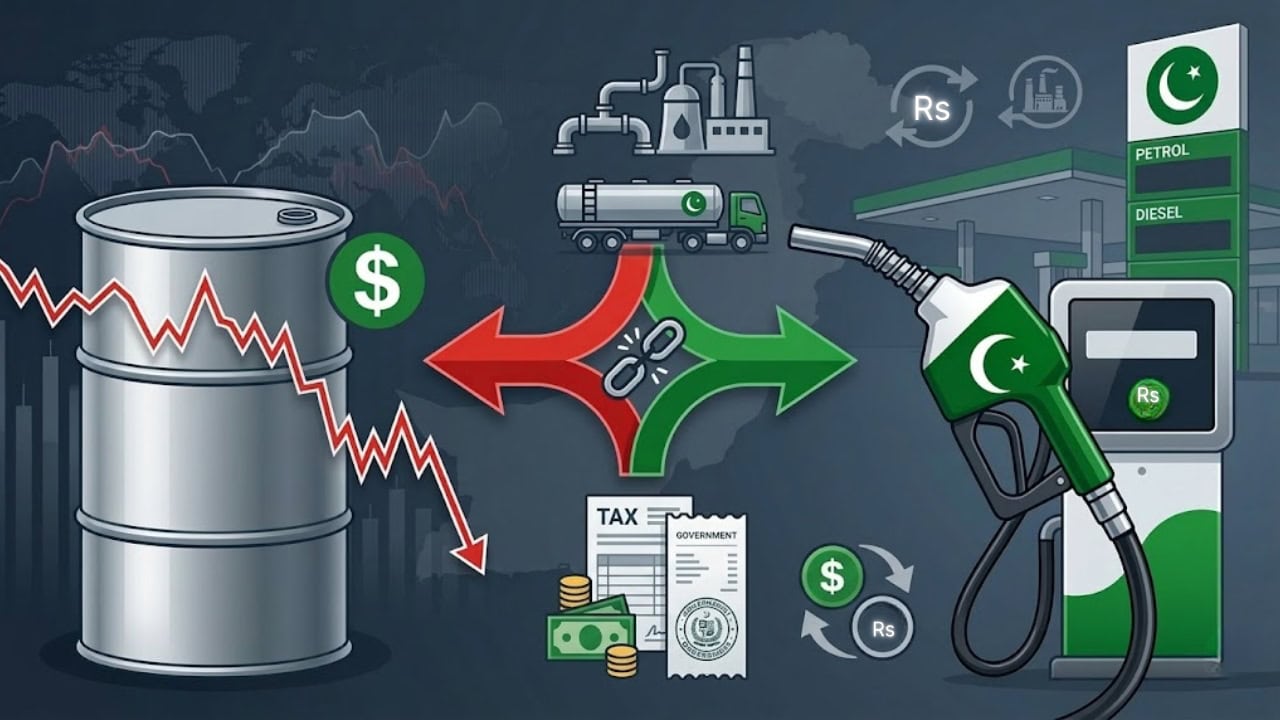
Screenshots of Brent crude oil prices have been widely circulating on social media in recent days, with many users linking the benchmark to Pakistan’s domestic petrol and diesel prices. Energy analysts say the comparison is misleading because Brent crude is not the primary benchmark used in Pakistan’s fuel pricing system.
Pakistan’s crude supply is largely tied to the Dubai crude benchmark rather than Brent. Recent trading placed Dubai crude at roughly 134.4 dollars per barrel on a free on board basis. After adding premiums, insurance, and shipping costs, the estimated landed cost of crude imported into Pakistan rises to about 144 dollars per barrel.
However, crude prices themselves do not directly determine domestic petrol and diesel prices. Pakistan follows a regulated pricing mechanism that relies on international benchmarks for refined petroleum products rather than crude oil.
Under the system, the government calculates local fuel prices based on Platts benchmarks for finished petroleum products. Petrol and diesel prices are derived from the average international price of those products during a defined pricing period, along with additional costs such as freight, taxes, and margins.
Current international benchmarks place petrol prices at roughly 120 dollars per barrel while diesel trades closer to 170 dollars per barrel. These product prices, not crude oil benchmarks such as Brent, serve as the primary reference for calculating domestic fuel rates.
Energy experts say confusion between crude benchmarks and refined product pricing often leads to inaccurate conclusions about how global oil market movements affect local fuel prices.
Analysts note that understanding the distinction between crude supply benchmarks and refined product pricing is essential for evaluating changes in Pakistan’s petroleum prices and for having a more informed discussion about the country’s energy costs.
Abdul Wasay explores emerging trends across AI, cybersecurity, startups and social media platforms in a way anyone can easily follow.
Pakistan and the International Monetary Fund (IMF) failed to reach a staff-level agreement. The crucial negotiations covered the third review of the 37-month Extended Fund.
Gold and silver prices in Pakistan fluctuate frequently based on international market trends. Local gold markets and Sarafa Markets provide the rates listed here in.
Pakistan and the International Monetary Fund (IMF) are close to reaching a staff-level agreement to revise the Federal Board of Revenue’s tax target to Rs13.45 trillion for FY2025-26, reflecting.
With Eid-ul-Fitr approaching, demand for fresh currency notes has surged across Pakistan, pushing open market prices significantly higher as many people struggle to obtain new.