
Samsung Wins Court Case Against TCL in Germany Over “Fake Quantum Dot” TVs
Intelligence report synthesized for precision. Verified source updates below.
Detailed Report
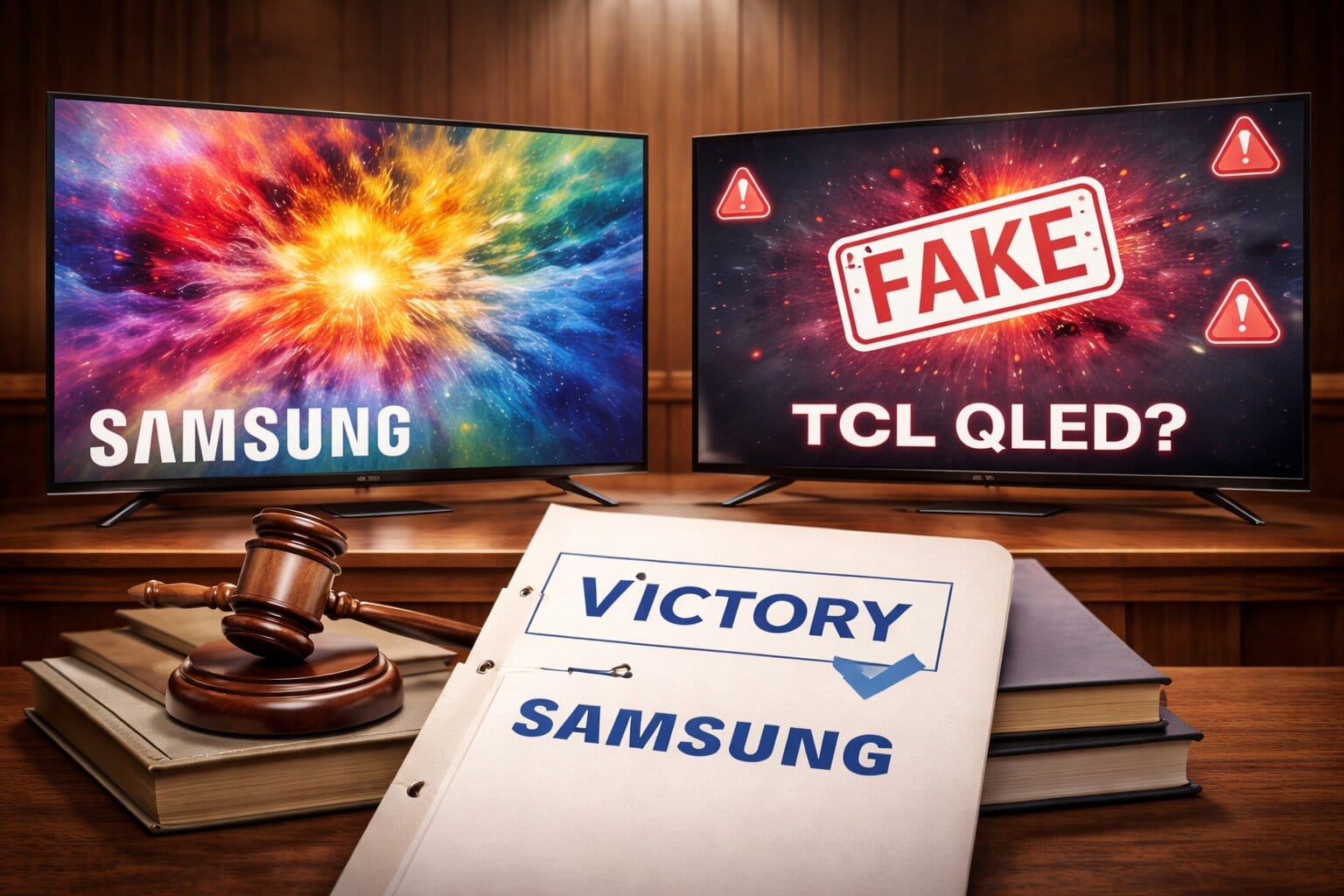
In a fresh twist in the display technology wars, Samsung Electronics has secured a courtroom win in Germany against TCL over what it called misleading “QLED” TV marketing. The decision adds new pressure in an already tense fight over how premium TV technologies are labeled and sold.
Quantum dots are used in certain display types for improved efficiency and color accuracy. For example, some Samsung TVs use ultraviolet backlights. Ultraviolet LEDs are very efficient, but UV isn’t even in the visible spectrum. Quantum dots absorb this UV light and output visible light in the desired color. An additional advantage to this approach is that quantum dots are much easier to tune to an exact wavelength of light than a typical LED.
Samsung told the Munich I Regional Court that several TCL TV models advertised as “QLED” did not actually use quantum dot technology. According to the ruling, TCL failed to challenge that claim during proceedings.
The court identified six different TV series in question. It ordered TCL to stop promoting those models as “QLED.” The company must also correct the misleading statements tied to those products. However, the ruling is not legally binding yet. TCL still has the option to appeal.
This legal clash does not stop at Germany. Samsung is pursuing similar cases against TCL in the United States and South Korea. Therefore, the outcome in Germany could shape how those disputes unfold.
A tech writer passionate about covering the latest in mobile technology, AI innovations, and digital transformation. Focused on making complex tech stories simple, engaging, and relevant for readers in the modern digital age.
The Federal Board of Revenue (FBR) has implemented strict cybersecurity measures to protect sensitive data from cyberattacks. FBR officials recently submitted a formal, written report.
Website hacking and data leaks have emerged as a serious threat to Pakistan’s digital infrastructure, with both federal and provincial government institutions becoming major targets.
A Google report reveals how a stolen developer token from last year’s nx package attack was used to breach a victim’s cloud environment, create an.
The federal government has fully digitized more than 32 public services. Citizens currently access essential NADRA documents directly through mobile applications. Federal Minister for Information.