
Zürich Airport Deploys Driverless L4 Autonomous Shuttles on Active Grounds
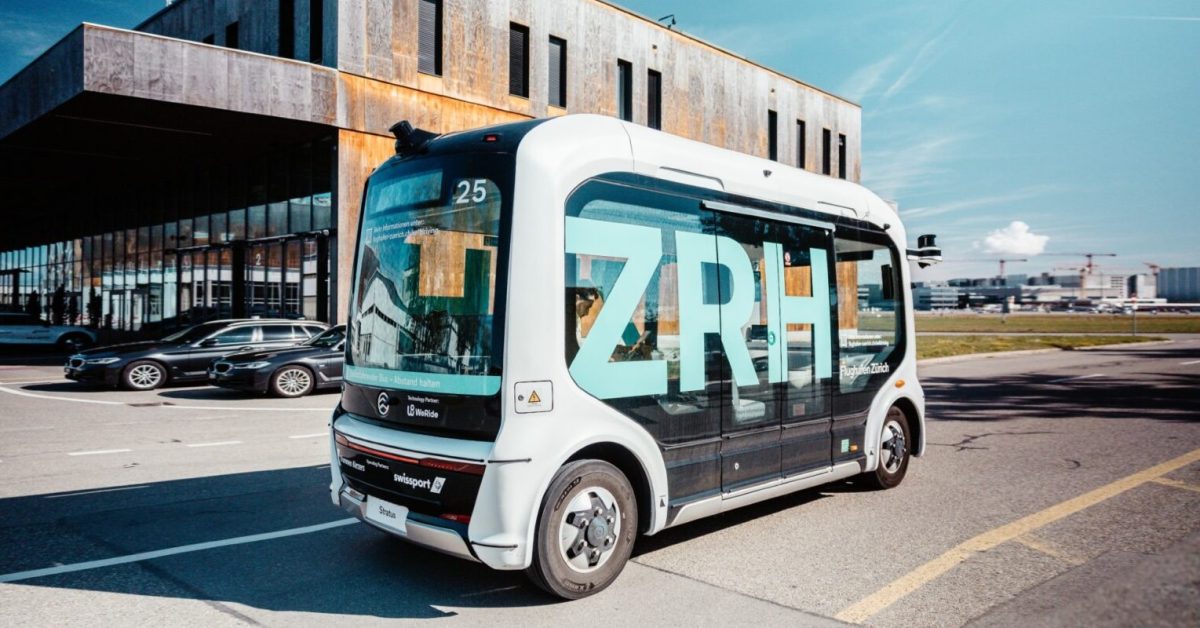
Flughafen Zürich AG has formally deployed two fully automated electric shuttle buses across the perimeter of Zürich Airport, eliminating human safety monitors inside the vehicle cabin. The deployment places the Swiss aviation hub among the first major European airports to operate Level 4 (L4) autonomous transport in an active operational environment. Developed in collaboration with Guangzhou-headquartered autonomous technology specialist WeRide, the initiative represents a practical application of uncrewed logistics within highly controlled infrastructure.
The deployment strategy follows a multi-stage validation framework established in early 2025. During the initial four-week trial phase, the twin shuttles are operating strictly without passengers to establish baseline telemetry and confirm system reliability under real-world weather and traffic conditions. Following this testing period, the vehicles will transition to moving airport staff along a pre-programmed route servicing internal logistics zones, notably excluding active aircraft taxiways and runways.
Remote operations centers managed by partner companies, including ground services provider Swissport and logistics firm Krummen Kerzers, will provide real-time monitoring and teleoperation capabilities. By decoupling physical vehicle control from on-board personnel while maintaining tele-oversight, Flughafen Zürich AG aims to address structural labor constraints while simultaneously advancing its long-term ground fleet decarbonization commitments.
Key Developments & Policy Breakdown
- Driverless Level 4 Authorization: The shuttles operate without an on-board safety driver or physical attendant, satisfying European Union and Swiss regulatory standards for Level 4 autonomous vehicle operation within localized environments.
- Strategic Tech Collaboration: The hardware and autonomous driving software architecture were co-developed with WeRide, utilizing specialized sensor suites and algorithms adapted for restricted airport perimeter routes.
- Phased Implementation Schedule: Initiated in March 2025, the pilot program requires a four-week non-passenger operational phase before opening transit services to airport personnel and partner contractors.
- Segregated Operating Envelope: Transit routes are mapped to bypass active taxiways and runways, minimizing operational risks with commercial aircraft movements while navigating complex ground support traffic.
- Teleoperation Safety Architecture: Ground logistics providers Swissport and Krummen Kerzers supply dedicated remote monitors equipped to intervene via teleoperation if environmental anomalies occur.
In-Depth Analysis & Real-World Impact
The transition to uncrewed Level 4 autonomy at Zürich Airport reflects broader structural adjustments sweeping the commercial aviation and logistics sectors. Ground handling and airport operations across Europe face chronic workforce shortages, exacerbated by demographical shifts and demanding operational schedules. By automating routine perimeter transit—such as shifting ground crew between terminals, hangars, and administrative facilities—airport operators can redistribute scarce human capital toward high-value technical and customer-facing roles.
From an economic standpoint, the integration of autonomous electric shuttles directly aligns with European airport sustainability mandates. Replacing conventional diesel-powered support vans with zero-emission, software-driven shuttles reduces localized carbon output and yields predictable operational expenditures over time. However, the reliance on technology supplier WeRide highlights a complex geo-economic dynamic: European infrastructure operators remain reliant on international hardware and software expertise to accelerate their autonomous vehicle roadmaps, even as regional regulatory frameworks enforce strict cybersecurity and operational compliance standards.
Background, Preceding Events & Historical Context
The rollout in Zürich follows years of targeted testing within closed industrial sites and controlled urban corridors across Europe. While autonomous shuttle pilots have been conducted in various municipalities, most historical deployments mandated a human safety driver behind the wheel or an attendant equipped with an emergency override device. The removal of this safety net marks a definitive shift from exploratory technology trials to operational integration.
European regulatory bodies have gradually laid the groundwork for Level 4 deployment through updated frameworks covering automated driving systems. Since early 2025, Flughafen Zürich AG subjected the WeRide vehicles to testing protocols to satisfy both Swiss federal transit requirements and broader EU safety benchmarks. This process verified sensor performance across varied meteorological conditions, electromagnetic interference resilience near radar systems, and fail-safe redundancy protocols during network latency events.
“"The gradual automation of vehicles can make an important contribution for airports given the emerging shortage of skilled workers. For us, it was therefore essential to lay the necessary groundwork early on." — Coralie Klaus Boecker, Head of the ZRH Innovation Hub at Flughafen Zürich AG”
Strategic Outlook & What to Watch Next
Looking ahead, the successful execution of the four-week passenger-free trial will determine the timeline for expanding autonomous services across additional airport zones. If internal staff transport demonstrates high reliability and low remote-intervention rates, Flughafen Zürich AG and its operational partners are expected to assess scaling the fleet to cover cargo movement and eventual passenger shuttles in non-movement areas.
Industry observers will monitor how regulatory authorities evaluate the data generated by Swissport and Krummen Kerzers' teleoperation units. The performance metrics gathered from this live environment will serve as a benchmark for other European aviation hubs considering automated ground support equipment. As regulatory confidence grows, similar driverless frameworks could soon expand into wider perimeter logistics, transforming standard ground operations across international airports.
Quik News synthesizes verified facts across international press reporting. Original reporting belongs to the attributed outlets above.

![Pony.ai to put 100,000 autonomous electric trucks on the road by 2030 [video]](https://i0.wp.com/electrek.co/wp-content/uploads/sites/3/2026/08/pony_ai.jpg?resize=1200%2C628&quality=82&strip=all&ssl=1)

