
Why limited war with the US may suit Iran better than peace
Intelligence report synthesized for precision. Verified source updates below.
Detailed Report
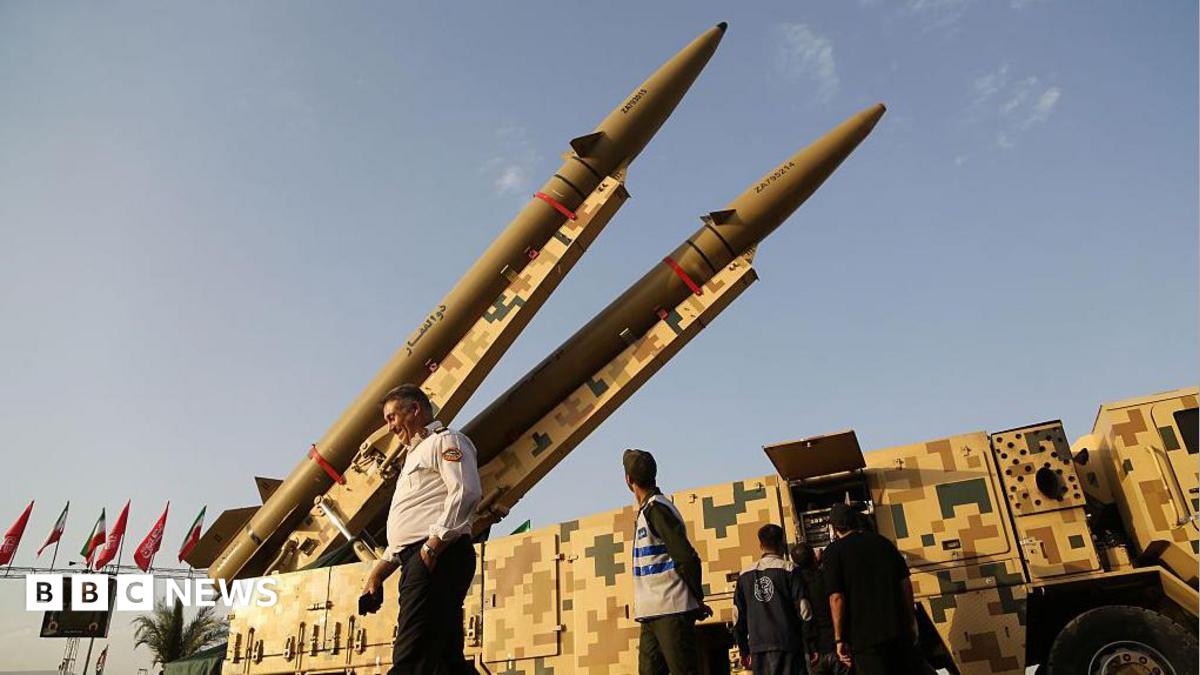
Image source, Anadolu via Getty ImagesImage caption, Hostilities between the two countries have flared up again in recent days
At first glance, Iran's surprise missile strike on a US base in Jordan earlier this week appeared difficult to explain. The attack effectively ended the fragile pause in direct US-Iran fighting and prompted Washington to resume strikes inside Iran. It was also unusual.
If Tehran's priority had been a ceasefire, the strike is difficult to explain. But if Iranian leaders judge that a controlled confrontation could offer greater strategic leverage, the decision becomes more understandable.
One possible explanation is that Tehran believes that, despite its risks, a limited war serves its interests better.
Today, neither side appears ready for an all-out war. Washington has shown little appetite for a much broader regional conflict that could threaten energy infrastructure in the region, draw in more countries, push oil prices higher, and further stretch US military resources.
Iran may also try to avoid an all-out war because its weakened air defences, vulnerable industrial infrastructure and sanctions-constrained economy make rebuilding losses increasingly difficult and expensive.
Iran may have concluded that this creates room for a strategy based not on military victory but on sustained pressure.
A prolonged ceasefire under current conditions could actually leave Tehran in a weaker position. The US naval blockade of Iranian ports would continue, sanctions would remain, and Iran would still be largely excluded from international energy markets.
Image source, Getty ImagesImage caption, Although Iran is paying a heavy military and economic price, disruption in the Strait of Hormuz continues to have global ramifications.
Meanwhile, Saudi Arabia, the UAE, Qatar and other oil and gas exporting countries in the region could gradually resume normal exports while Iran remained economically isolated.
A limited conflict could change this landscape for Iran. Although Iran is paying a heavy military and economic price, disruption in the Strait of Hormuz and, through the Houthis, pressure around Bab al-Mandab continue to affect global shipping, insurance costs and energy markets. Even limited uncertainty forces governments, shipowners and importers to pay attention to Iran's demands.
In effect, Tehran may believe it still possesses leverage.
Iran also appears to be trying to reshape the diplomatic discussion. Rather than accepting unrestricted freedom of navigation, it has repeatedly signalled that shipping should operate under rules agreed with or administered by Iran. If that interpretation is correct, Tehran's objective may be that any future reopening of the Strait of Hormuz reflects Iranian influence rather than a return to the pre-war status quo. An ongoing, limited conflict would allow Iran to keep the pressure on to achieve this goal.
From Tehran's perspective, keeping the crisis alive below the threshold of total war may therefore be preferable to accepting a ceasefire that leaves sanctions, the blockade and economic isolation largely unchanged.
There may also be domestic calculations. Iran continues to face high very inflation rates, unemployment, economic hardship and public dissatisfaction. During periods of external conflict, governments often find it easier to suppress internal opposition, justify tighter security measures and rally support around national defence. That does not remove Iran's economic problems, but it may reduce the immediate political pressure created by them.
Image source, Getty ImagesImage caption, The conflict with the US does not remove domestic pressures the country faces, but may reduce the immediate political pressure created by them.
None of this means the strategy is without significant costs. Iran continues to absorb repeated military strikes, economic uncertainty, and there is no guarantee that the current balance can be sustained.
That is the main paradox facing Tehran. A controlled conflict may currently offer more leverage than an imperfect peace, but controlled conflicts have a habit of becoming uncontrolled. Iran may believe it can calibrate escalation carefully enough to keep pressure on the United States, global energy markets and regional diplomacy while avoiding all-out war.
But that calculation also carries significant risks. Beyond the possibility of a much wider war, a prolonged conflict with no clear end in sight could gradually strengthen international support for a tougher response.
There are already signs that the conflict is widening. Saudi Arabia, which had initially sought to avoid becoming directly involved, has carried out strikes against Iran-aligned Shia groups in Iraq and taken military action against the Houthis. If disruption to global trade and energy markets continues, other countries that have so far tried to remain on the sidelines could become more willing to support efforts to increase pressure on Iran.
Some governments may also conclude that bearing the costs of a more robust response is preferable to living with repeated crises affecting international shipping and energy supplies.
Whether those possibilities laid out above - including more countries getting actively involved - prove correct remains uncertain. Much may depend on whether Tehran is able to maintain calibrated actions without triggering a response that fundamentally changes the political and military calculations of the United States. The next unexpected strike could determine which path the conflict takes.
US launches 'heavy' strikes on Iran after attempted attack on American troops
Saudi Arabia's dilemma as it tries to stay out of US-Iran war
As the US pauses the war with Iran, is Trump really running out of weapons?
PreviousNext0:32Interviews: Online or in person? 00:00:32, play videoInterviews: Online or in person?0:44A giant iceberg turns near Greenland's coast. 00:00:44, play videoA giant iceberg turns near Greenland's coast0:57Who's nominated for this year's Mercury Prize? 00:00:57, play videoWho's nominated for this year's Mercury Prize?1:03What is the PM's plan to 'fix' social care? 00:01:03, play videoWhat is the PM's plan to 'fix' social care?1:0213-year-old Charlie runs his own dairy business. 00:01:02, play video13-year-old Charlie runs his own dairy business1:02How is the UK interest rate decided? 00:01:02, play videoHow is the UK interest rate decided?1:32How to get a festival look that isn't toxic. 00:01:32, play videoHow to get a festival look that isn't toxic0:10Zendaya's advice on working with husband Tom Holland. 00:00:10, play videoZendaya's advice on working with husband Tom Holland0:41Can a heatwave cause trees to fall? 00:00:41, play videoCan a heatwave cause trees to fall?0:55'Andy Burnham, please don't ruin my wedding' 00:00:55, play video'Andy Burnham, please don't ruin my wedding'0:19Creamy smashed salmon on toast. 00:00:19, play videoCreamy smashed salmon on toast0:39England hit by 'flash drought': What is it? 00:00:39, play videoEngland hit by 'flash drought': What is it?1:18Teenage Norwegian 'hitman' guilty of UK murder plot. 00:01:18, play videoTeenage Norwegian 'hitman' guilty of UK murder plot0:24'Are you the local candidate?' - 'No, I'm the PM' 00:00:24, play video'Are you the local candidate?' - 'No, I'm the PM'0:56What is social care? 00:00:56, play videoWhat is social care?0:48Is the World Cup for sale? 00:00:48, play videoIs the World Cup for sale?2:43Jared Leto accused of criminal sexual conduct by four women. 00:02:43, play videoJared Leto accused of criminal sexual conduct by four women1:09Planes dump water on French wildfires as temperatures rise. 00:01:09, play videoPlanes dump water on French wildfires as temperatures rise0:55Japan in a 'race against time' to rescue people after quake. 00:00:55, play videoJapan in a 'race against time' to rescue people after quake2:35Inside a Palestinian village under weekly Israeli settler attacks. 00:02:35, play videoInside a Palestinian village under weekly Israeli settler attacksTop storiesUefa to boycott World Cups if Fifa plans approved
Live. Suffolk fire grows to size of 200 football pitches as helicopter drops sea water on blaze
Thousands evacuated in Crete as wildfires threaten tourist resorts
How the UK's extreme heat is shifting the conversation about air-con
Your guide to toxin-free festival make-up
Israel building new land barriers in Gaza and displacing families
Beauty Pie founder on how she dropped out of university and built five beauty businesses
I refuse to feel ashamed of my genital herpes diagnosis
He watched the 1966 World Cup final at Wembley aged 16 - no day since has matched it
The Chinese robot army transforming the UK's retail industry
'It was heartbreaking to attend a fertility appointment in a maternity unit'
Get news, tips and ideas for your family with our Summer Essential newsletter
A new high-stakes thriller crackling with danger
Kiri Pritchard-McLean returns with more medical wonders
New documentary uncovers sexual misconduct claims against Leto
Football fact or fiction: Can you spot the lie?
British Airways flight called mayday on approach to Heathrow
Hundreds of migrants swim from Morocco to Spanish enclave of Ceuta
Why limited war with the US may suit Iran better than peace
Thousands evacuated in Crete as wildfires threaten tourist resorts
Danube's record low levels force shutdown of Hungary's only nuclear plant
Drought declared across whole of Wales as conditions 'deteriorate'
Holidaymakers warned about 'explosive diarrhoea' cyclospora parasite infection
Burnham says he told Trump UK will be pragmatic about North Sea oil
Festival food stall closed after dozens report falling ill
Greens review social media operation as Polanski row rumbles on


