
Ukrainian Armed Drone Sinks Russian Explosive Boat in First USV Sea Battle
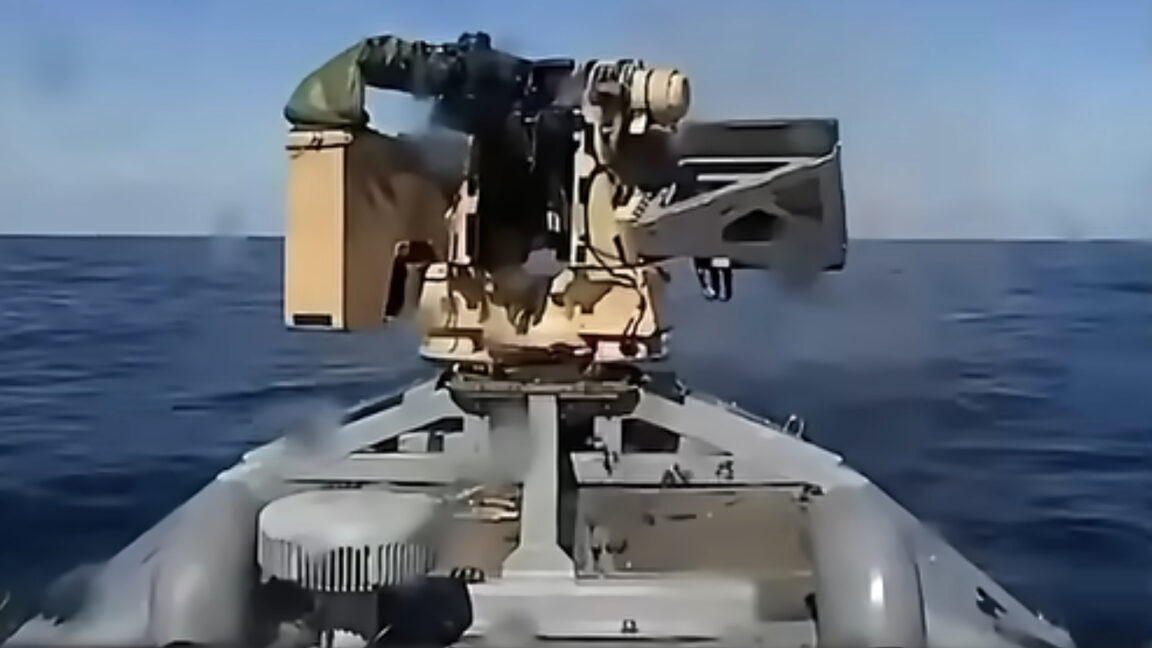
The Black Sea has become a primary testing ground for remote warfare innovations, but an engagement on September 12 marked a fundamental shift in naval tactical doctrine. Ukrainian intelligence forces intercepted and destroyed a Russian explosive-laden uncrewed surface vessel (USV) using an armed robotic boat, recording the world’s first documented battle between surface drones.
The engagement unfolded when Ukrainian Defense Intelligence units detected a Russian "Orcan" class drone boat navigating open waters. Ukrainian commanders directed a Sargan-3000 USV to intercept the target. Equipped with a Norwegian-manufactured Kongsberg remote weapon station housing a 12.7 mm machine gun, the Ukrainian vessel engaged the Russian craft from a distance of approximately one kilometer, disabling its communications antenna before firing sustained bursts that ultimately sank the vessel.
Independent defense analysts highlighted that direct counter-drone engagements at sea were an inevitable progression given the wide deployment of robotic platforms across land, air, and ocean domains. The clash demonstrates that uncrewed surface vessels are transitioning from one-way strike munitions into versatile surface combatants capable of patrol, interdiction, and ship-to-ship engagements.
Key Developments & Policy Breakdown
- Tactical Engagement Parameters: The engagement took place on September 12, when a Ukrainian Sargan-3000 USV targeted a Russian Orcan surface drone at a range of one kilometer using a 12.7 mm remote-controlled machine gun turret.
- Hardware & Performance Specs: The Ukrainian Sargan-3000 achieves top speeds between 40 and 55 knots, features an operational range of 1,600 kilometers, and carries a 450-kilogram payload capacity while hosting a Norwegian Kongsberg remote weapon system.
- Target Identification: Defense analysts confirmed the targeted Russian craft was an Orcan-class drone, powered by a jet-ski-style steerable water jet designed primarily to ram targets and detonate on impact.
- Integrated Reconnaissance: Russian Orcan strike drones routinely operate alongside flying reconnaissance assets, such as Geran long-range drones, which extend line-of-sight communication and real-time targeting telemetry over ocean distances.
- Strategic Mission Objectives: The deployment aligns with Ukraine's broader strategy of using asymmetric uncrewed systems to degrade the Russian Black Sea Fleet, secure grain corridors, and isolate supply routes bound for the occupied Crimean Peninsula.
In-Depth Analysis & Real-World Impact
The move from using USVs exclusively as disposable explosive rams to arming them with reusable kinetic weapon systems represents a clear jump in naval engineering. Equipping craft like the Sargan-3000 with remote-controlled guns allows military operators to engage multiple secondary threats without sacrificing the primary vehicle. This structural change fundamentally alters the economic balance of naval blockades, making littoral defense far more sustainable for smaller naval forces.
Furthermore, this development directly impacts commercial navigation and critical infrastructure safety in shared waters. The operational reach of Russian surface drones poses a ongoing challenge to international shipping lanes. Earlier in August, an uncrewed Russian explosive vessel drifted near a key European natural gas platform near Romania before a NATO tactical fighter jet disabled it. The emergence of active drone-versus-drone dogfights highlights the expanding threat profile surrounding energy infrastructure throughout the Black Sea basin.
Naval forces worldwide are closely analyzing these engagements to refine their own procurement strategies. Beyond surface engagements, uncrewed craft are now deployed as motherships capable of launching First-Person View (FPV) aerial drones and amphibious ground units. Tactical control over littoral waters increasingly hinges on network density and automated weapons integration rather than traditional naval fleet tonnage.
Background, Preceding Events & Historical Context
Ukraine’s heavy reliance on asymmetric maritime warfare stemmed from necessity following the 2014 annexation of Crimea and the full-scale invasion in 2022, which neutralized most of Kyiv’s conventional surface fleet. Deprived of heavy warships, Ukrainian engineers developed swarms of low-profile USVs to attack Russian frigates, patrol vessels, and logistics infrastructure, effectively forcing the Russian Black Sea Fleet to retreat from open waters to protected ports like Novorossiysk.
Russia responded by developing its own uncrewed strike platforms while deploying aerial surveillance nets to protect its remaining naval assets. Similar technological trends are surfacing in other global flashpoints. The United States military recently deployed USVs in combat operations within the Middle East, illustrating that uncrewed surface combat is rapidly becoming standard practice among modern armed forces.
“"The transition to direct vessel-on-vessel robotic combat shifts the Black Sea operational calculus from passive hazard avoidance to active ocean domain control."”
Strategic Outlook & What to Watch Next
Over the coming months, defense analysts expect both Ukrainian and Russian forces to integrate autonomous targeting algorithms and hardened electronic protection into their naval drone fleets. As operators face intense radio-frequency jamming—demonstrated by how quickly the Sargan-3000 targeted the Orcan’s antenna—onboard artificial intelligence will prove vital for maintaining target lock and completing engagements without active human guidance.
Concurrently, NATO littoral states bordering the Black Sea are likely to accelerate investment in automated point-defense systems, naval gun turrets, and electronic warfare suites for coastal patrol fleets. Navies globally will monitor upcoming deployment patterns to evaluate how uncrewed surface combatants reshape amphibious defense, commercial escort operations, and territorial water monitoring in contested marine zones.
Quik News synthesizes verified facts across international press reporting. Original reporting belongs to the attributed outlets above.