
SBP Declares Pakistan Banks Resilient After 15% Financial Sector Growth
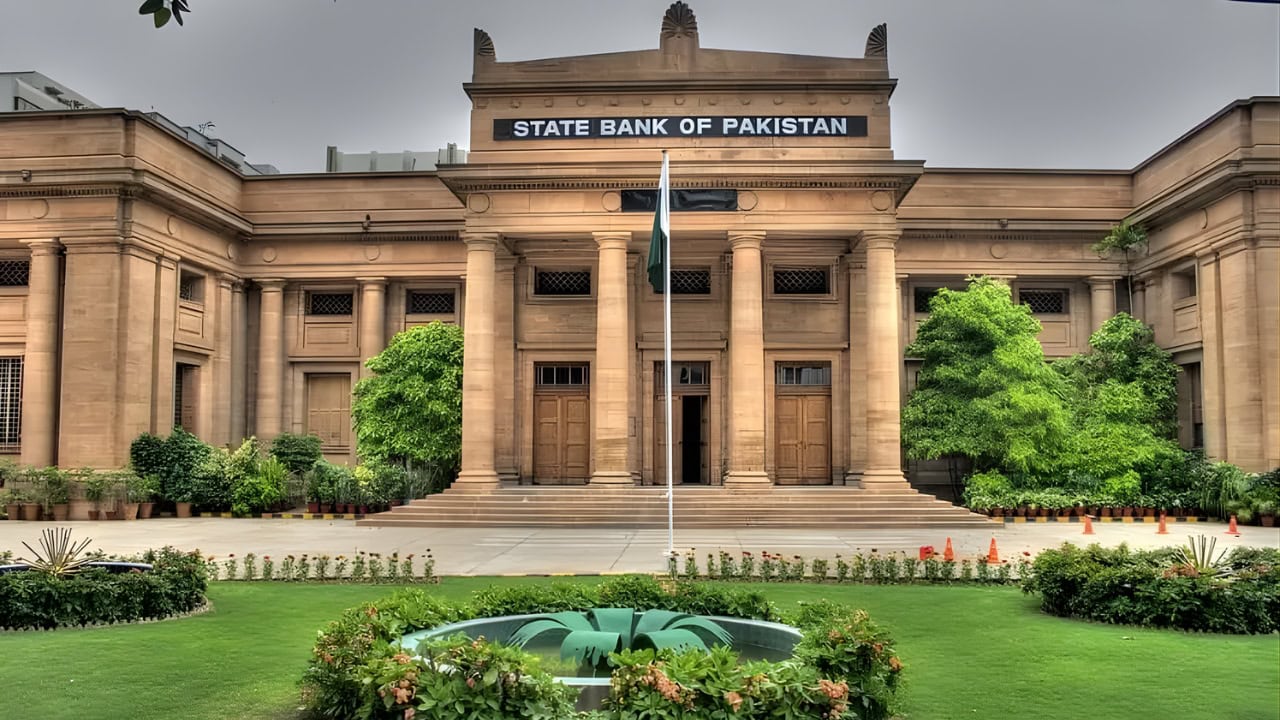
Intelligence report synthesized for precision. Verified source updates below.
Detailed Report
Pakistan’s banking sector has strengthened significantly and is now better prepared to withstand economic shocks, according to the latest Financial Stability Review (FSR) 2025 released by the State Bank of Pakistan.
The central bank reported that the country’s overall financial sector expanded by 15.1 percent in 2025, supported by higher deposits, improved asset quality, and stronger capital buffers across banks.
According to the SBP, the financial system remained resilient despite global economic uncertainties. Financial depth also improved during the year, with the assets-to-GDP ratio rising to 67.1 percent, while overall risks to stability declined.
The review covers a broad range of institutions, including commercial banks, microfinance banks, development finance institutions, insurance companies, and financial markets.
The central bank noted that domestic economic conditions improved in 2025, with inflation falling within the target range and economic activity gaining momentum.
Foreign exchange reserves also strengthened due to a controlled current account deficit and strategic dollar purchases. Pakistan continued progress under the International Monetary Fund programs, including the Extended Fund Facility and the Resilience and Sustainability Facility.
The banking sector remained stable, with total assets growing by 17.8 percent, largely driven by increased investment in government securities.
Deposit mobilisation improved significantly, reducing reliance on borrowings. Meanwhile, asset quality strengthened as the non-performing loans ratio declined to 6.1 percent in December 2025, compared to 6.3 percent a year earlier.
Provisioning coverage rose to 107.7 percent, indicating that banks are well-prepared to absorb potential losses.
Banks’ after-tax profits increased during the year, although profitability ratios moderated due to volume-driven earnings growth. The sector’s capital adequacy ratio rose to 20.8 percent well above both regulatory and international minimum requirements.
Islamic banking institutions recorded their largest-ever expansion in branch networks while maintaining strong capital positions and stable earnings.
Microfinance banks, however, continued to face challenges, though losses declined due to ongoing recapitalisation and restructuring efforts.
Performance across non-bank financial institutions remained mixed. Development finance institutions saw a contraction in assets, while other non-bank entities recorded steady growth. The insurance sector maintained strong performance throughout the year.
Financial market infrastructures demonstrated resilience, supported by rapid growth in digital transactions. Key initiatives included the rollout of PRISM+, expansion of QR payments under RAAST, and implementation of the T+1 settlement system by the National Clearing Company of Pakistan Limited.
Looking ahead, the SBP cautioned that geopolitical tensions, particularly in the Middle East, could pose risks to financial stability. However, it emphasized that strong capital buffers and effective regulatory frameworks would help the banking sector manage potential shocks.
Stress test results indicate that Pakistan’s banking system is expected to remain resilient even under severe economic scenarios over the next three years.
The central bank reaffirmed its commitment to maintaining financial and price stability while supporting sustainable economic growth.
FinanceIMF to Review $1.21bn Disbursement for Pakistan on May 8 Under EFF, RSFBy Sabica Tahira|1 week ago |2 min readThe International Monetary Fund (IMF) is set to hold an executive board meeting on May 8 to review the approval of over $1.21 billion in disbursements for Pakistan under its.
FinanceEU Announces €160 Million Loan Package for Pakistan Recovery and InfrastructureBy Sabica Tahira|1 week ago |1 min readThe European Union European Union has announced a €160 million financial assistance package for Pakistan aimed at supporting post-disaster recovery and strengthening urban infrastructure. According to officials, formal loan.
FinancePakistan Agrees With IMF on Rs.2.8 Trillion Primary Surplus Target for FY2026–27By Sabica Tahira|1 week ago |2 min readPakistan has reached an agreement with the International Monetary Fund International Monetary Fund to maintain a tight fiscal framework under ongoing policy discussions, committing to a major.