
Google Home to Remove Phone-Related Automation Actions? Here’s What’s Going On
Intelligence report synthesized for precision. Verified source updates below.
Detailed Report
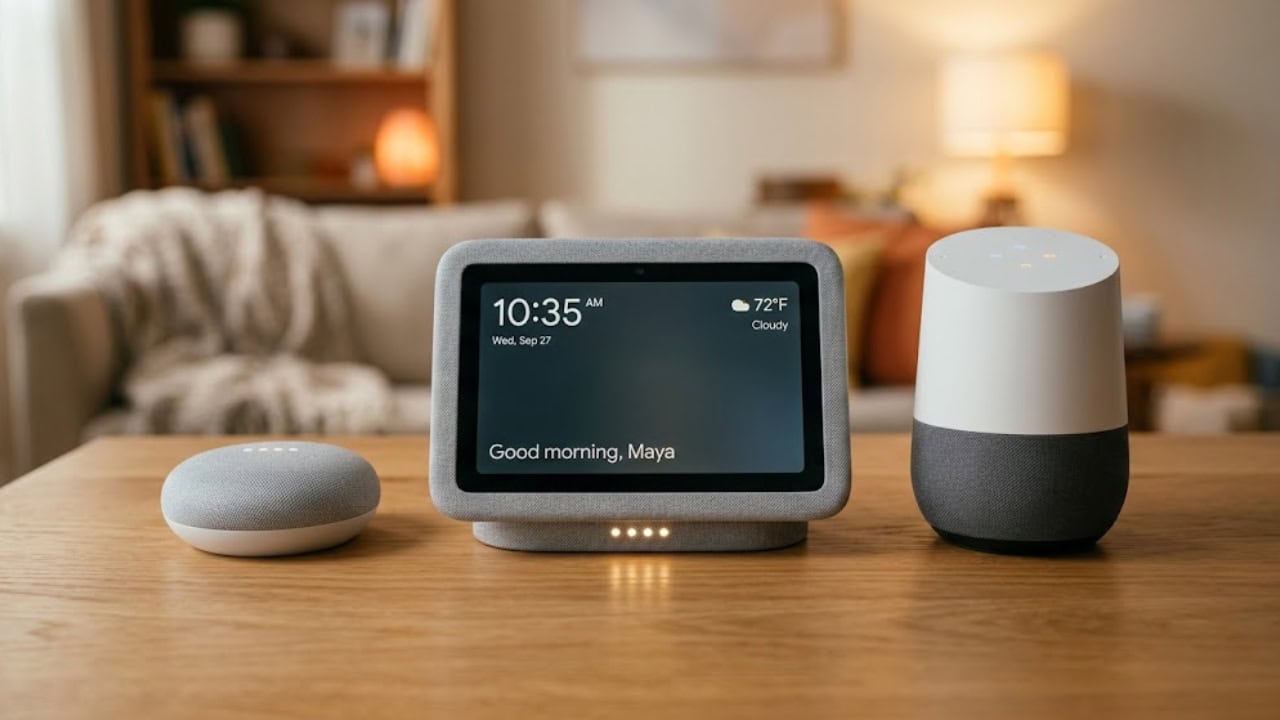
Google Home users started panicking this week after hearing a confusing message about automations going away in May. Google clarified on Thursday that core automations will remain, but it will remove phone-related actions.
Some users noticed over the past couple of days that their speakers and smart displays said “just so you know, phone actions and automations will no longer be available starting in the first week of May.” That message understandably freaked people out. Google Home relies heavily on automations, and the company has improved them significantly in recent months.
Removing automations would be a drastic move given how central they are to the platform, but Google is not taking that step. The company confirmed in a reply to an affected user that Home automations will remain, while it will discontinue certain phone-related actions.
Google explained the situation clearly in a community post. The company is removing phone-related actions in automations including checking battery level, setting or unsetting Do Not Disturb, and adjusting phone volume. Home automations will continue to work and any Home-related actions will remain part of automations and be fully functional.
These phone actions allowed Google Home devices to control Android phone settings through automation routines. Users could set up automations that would automatically silence their phone at bedtime, check battery levels or adjust volume based on time of day or location triggers. Starting in early May, those specific functions will no longer work through Google Home devices.
The vast majority of Google Home automations will not be impacted by this change. Controlling lights, adjusting thermostats, playing media, locking doors and other smart home device functions will continue working exactly as before. The automation editor that Google overhauled less than a year ago remains fully functional for non-phone actions.
Users who relied on these specific phone actions will need to perform those tasks directly on their smartphones instead. Finding a phone will require using the dedicated Find My Device app. Sending messages or making calls will revert to direct phone usage. Smart home control remains unaffected.
This shift likely connects to Google’s ongoing transition to Gemini as the primary AI intelligence across devices. Google has been reshaping its smart home setup over the past few months with Gemini becoming the default brain across devices rather than just an optional layer.
The company recently posted a message to the Nest Community announcing a unified vision for Google Home and Nest debuting in May. That timing suggests the removal of phone actions is part of a broader platform reorganization rather than an isolated change.
Any loss of functionality is not great but in the grand scope of things the impact seems much smaller than it could have been. The vast majority of automations are not going to be impacted. Most users rely on Google Home primarily for controlling smart home devices rather than managing phone settings.
GadgetsApple’s Next Flagship Laptop Could Arrive as ‘MacBook Ultra’ With These ChangesBy Zohaib Shah|2 days ago |4 min readApple’s MacBook Pro lineup is already fresh after its recent upgrade. The 14-inch and 16-inch models now use M5 Pro and M5 Max chips, released.
GadgetsSamsung Galaxy Book6 Edge Appears Online With Snapdragon X2 Elite ProcessorBy Zohaib Shah|2 days ago |2 min readAt CES 2026, Samsung introduced its Galaxy Book6 lineup, powered by Intel’s latest 18A Core Ultra Series 3 chips. Now, a new variant is quietly.
GadgetsHonor Expands Tablet Lineup with MagicPad3 Pro 12.3 and 165Hz OLED DisplayBy Zohaib Shah|3 days ago |2 min readHonor is not slowing down after the buzz around its latest smartphones. The company has now introduced a new tablet, the Honor MagicPad3 Pro 12.3,.
GadgetsHow Samsung Plans to Compete With Meta Ray-Ban Smart GlassesBy Abdul Wasay|3 days ago |3 min readSamsung is developing a pair of smart glasses that could be more advanced than its forthcoming competitors to Ray-Ban Meta, with evidence suggesting a possible.