Pakistan-led diplomacy raises prospects of de-escalation
Intelligence report synthesized for precision. Verified source updates below.
Detailed Report
ISLAMABAD: Chances of negotiations between the United States and Iran opening up at the end of President Donald Trump’s five-day pause remain limited, but a Pakistan-led initiative — in coordination with Turkey and Egypt — has created a narrow de-escalation window.
Pakistan has taken centre-stage in a process being carried out in collaboration with Ankara and Cairo, with officials confirming that indirect exchanges between Washington and Tehran are continuing through structured message relays, rather than direct contact.
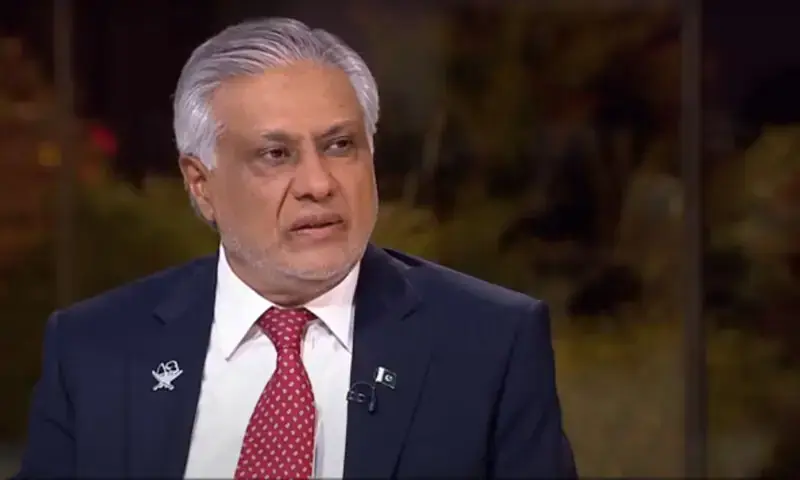
In a post on X, Deputy Prime Minister and Foreign Minister Ishaq Dar confirmed that “US-Iran indirect talks are taking place through messages being relayed by Pakistan”, adding that a 15-point US framework had been shared and is under Iranian deliberation, while the “brotherly countries of Turkiye and Egypt” are supporting the effort.
According to a senior regional diplomat involved in the process, Chief of Army Staff and Chief of Defence Forces Field Marshal Asim Munir has been key in sustaining the channel, maintaining direct contact with Iranian Foreign Minister Abbas Araghchi and relaying positions conveyed by the US side and getting their stance.
Tehran looks at Islamabad’s role favourably because of what Iranians term its “comparatively balanced position” during the crisis and its perception as “a more reliable partner” than most of the other Muslim countries. Additionally, Field Marshal Asim Munir’s rapport with President Trump is seen in Tehran as a factor that could be helpful in opening the door for dialogue.
Officials familiar with the process say Pakistan has been acting as a go-between for some time, but stepped up its outreach in recent days as the conflict escalated and the risk of a wider regional spillover increased, with parallel engagements also taking place through Turkish and Egyptian channels involving senior level contacts on respective sides.
While all three countries are described in US media as equal intermediaries, Pakistani diplomats point to Islamabad’s ability to maintain working relations with both Washington and Tehran as a key factor in sustaining the channel.
Islamabad’s role, however, is being carefully framed.
Iran, according to the regional diplomat, sees Pakistan more as a facilitator than a mediator and expects it to play a role similar China’s contribution in the Iran-Saudi rapprochement, where quiet diplomacy created the conditions for direct engagement rather than imposing outcomes.
Pakistani officials have also avoided formal labels, with Foreign Office spokesperson Tahir Andrabi saying the country is offering its “good offices” and acting as a facilitator while stressing that diplomacy in such moments requires discretion, patience and confidentiality, and that the objective remains de-escalation, cessation of hostilities and a return to dialogue.
The exchanges so far have gone beyond a simple relay of positions and preliminary discussions have, according to Pakistani and foreign diplomats, also touched on the structure, sequencing and venue of possible talks. Islamabad has emerged as the lead candidate, with the PM House even being considered as a potential venue for an inaugural round if negotiations materialise, though no formal confirmation has been issued by Pakistan, the US or Iran.
This assertion about Islamabad being the preferred venue came amidst reports that US officials were reluctant to travel to Islamabad for the meeting because of security concerns. The FO spokesperson, while addressing these reports, said “Pakistan is very safe and secure. I do not think that safety concerns had any validity.”
Substantively, however, the gap between the two sides remains significant. Washington’s 15-point proposal, conveyed through Pakistan, includes demands related to zero enrichment, dismantlement of key nuclear facilities, transfer of enriched uranium stockpiles, limitations on ballistic missile programmes, cessation of support to regional armed groups, and guaranteed reopening of the Strait of Hormuz alongside a ceasefire framework leading to a broader agreement. While the proposal carries the prospect of sanctions relief, the regional diplomat noted that Tehran saw it as “maximalist”.
Iran has rejected core elements of the proposal, particularly any requirement to end uranium enrichment or dismantle its nuclear programme, and also made clear that its missile programme is not open for negotiation during an ongoing conflict.
On regional issues, the diplomat disclosed that Iranian officials have maintained that networks often described as proxies are not subject to negotiation in the current framework, while insisting that any future arrangement must go beyond a ceasefire and should include comprehensive cessation of hostilities addressing multiple theatres including Lebanon and Iraq, along with a new framework governing navigation through the Strait of Hormuz.
The diplomat said that the Iranian positions were shaped not only by strategic calculations but also by internal shifts within the Iranian system, where the space for negotiation has narrowed following the assassination of Ali Larijani, who had been among the more prominent advocates of dialogue and has been working on an initiative before his passing.
Decision-making has increasingly consolidated among harder line elements, with wartime management now resting with figures such as parliamentary speaker Mohammad Bagher Ghalibaf. Meanwhile the appointment of Mohammad Bagher Zolghadr as Larijani’s successor in the key security role reflects the growing influence of security institutions. In this context, potential Iranian negotiators, if talks materialise, are expected to be either led by Araghchi or Zolghadr, though no final decision has been taken.
On the US side, Vice President JD Vance is seen by Tehran as a more acceptable interlocutor due to his perceived less hawkish posture, while figures such as Witkoff and Jared Kushner are viewed as unacceptable due to what happened during the Omani mediated process when US along with Israel started war against Iran despite progress in talks.
FO spokesperson Andrabi said that Pakistan has also remained in close coordination with regional partners, including Saudi Arabia, aligning diplomatic messaging and simultaneously maintaining channels with all sides.
It is not clear if Tehran or Islamabad have taken Moscow and Beijing on board about this process. Despite the diplomatic activity, the likelihood of an immediate breakthrough, according to the regional diplomat, remains limited. He said that there was low probability that an initial meeting could take place in the coming days, and prospects for substantive agreement were also muted, unless the US takes a pragmatic position.