Islamabad offers to host US-Iran climbdown effort
Intelligence report synthesized for precision. Verified source updates below.
Detailed Report
ISLAMABAD: A day after a proposal was floated to hold Iran-US talks in the nation’s capital, Prime Minister Shehbaz Sharif formally pitched Islamabad as a potential venue for negotiations between Iranian and US officials.
“Subject to concurrence by the US and Iran, Pakistan stands ready and honoured to be the host to facilitate meaningful and conclusive talks for a comprehensive settlement of the ongoing conflict,” he wrote on X, tagging US President Donald Trump, Iranian Foreign Minister Abbas Araghchi and US Special Envoy Steve Witkoff.
The move followed reports that Pakistan, Turkiye and Egypt had talked the US out of attacking Iranian energy infrastructure — a move that many fear would mark a dangerous escalation in the already-deadly conflict raging in West Asia.
While there was no official word on whether the offer was Pakistan’s own initiative, sources privy to discussions said that the request that Islamabad host talks between the two warring sides had actually come from Washington.
This was a reference to President Donald Trump, who shared PM Shehbaz’s tweet on his own Truth Social platform.
Pakistan has not made the offer ‘just for fun’, the insider said, adding that there was a deeper significance behind the move.
When asked why Pakistan was chosen, the source said that the offer did not come about in a day or two, but was deliberated on in a series of meetings and backchannel efforts aimed at de-escalating the situation in the Middle East.
“Pakistan’s Deputy Prime Minister and Foreign Minister Ishaq Dar was in constant contact with Iranian counterpart Abbas Araghchi and talked to him at least five times in recent days,” the source said.
Similarly, PM Shehbaz has spoken to Iranian President Masoud Pezeshkian twice in a couple of days, and their last conversation on Monday was said to have lasted over an hour.
Meanwhile, the top military brass engaged Washington, the source said, referring to reports that Field Marshal Asim Munir had spoken to President Trump.
In addition, civil and military leaders also met Crown Prince Mohammad Bin Salman and his Defence Minister Faisal bin Farhan during a recent trip to Saudi Arabia, the insider said, painting all of these individual occurrences as being part of the chain of events that led up to the offer of Islamabad as a potential venue for de-escalation measures.
One source scoffed at the general feeling of ‘surprise’ over Pakistan playing a central role in organising talks between the warring sides, saying that it reflected how the country’s diplomatic potential was always underestimated.
The source recalled that in the past, the country had played a key role in mediating between Iran’s Ahmedinejad regime and Saudi Arabia when their enmity was at its peak.
Pakistan was also instrumental in bringing both the Afghan Taliban and Washington to the table at Doha.
Going further back in history, the source recalled how Pakistan was the conduit for Henry Kissinger’s surreptitious China diplomacy in the early 1970s.
‘15 points’ and Iran’s response
Tacitly confirming that a backchannel with Washington had been opened, Iranian foreign ministry spokesperson Esmail Baghaei said on Tuesday that messages from the US have been received and responded to, according to state-run Press TV.
The messages, “sent via friendly countries to seek talks and end the war, were received and answered in line with Iran’s principles”, the spokesperson said.
President Donald Trump, meanwhile, has claimed that there were “15 points” of agreement being discussed between the US and Iran.
Speaking to reporters at the airport in West Palm Beach, he said the No 1 point was that Iranians had committed to not having a nuclear weapon — which Tehran has repeatedly clarified in the past.
“I would say that if they carry through with that, it’ll end that, that problem, that conflict, and I think it’ll end it very, very substantially,” the president said.
“They went, I would say, perfectly,” he added later.
However, Iran’s president warned that stability in the region is possible only through “cooperation and respect for the will of the nations”.
“Today we are witnessing the awakening of the people in many countries around the world,” Masoud Pezeshkian wrote on X, claiming that people of Pakistan, Turkiye, Iraq, Lebanon, Egypt, and Arab countries are “loudly expressing their rejection of the US, Israel and their crimes”.
In any talks with the US, Iran would not only demand an end to the war but concessions that are likely red lines for President Trump —guarantees against future military action, compensation for wartime losses and formal control of the Strait of Hormuz, the sources said.
Iran would also refuse to negotiate any limitations to its ballistic missile programme, they said, an issue that had been a ‘no-go’ for Tehran during the talks that were taking place when the US and Israel launched their attack last month.
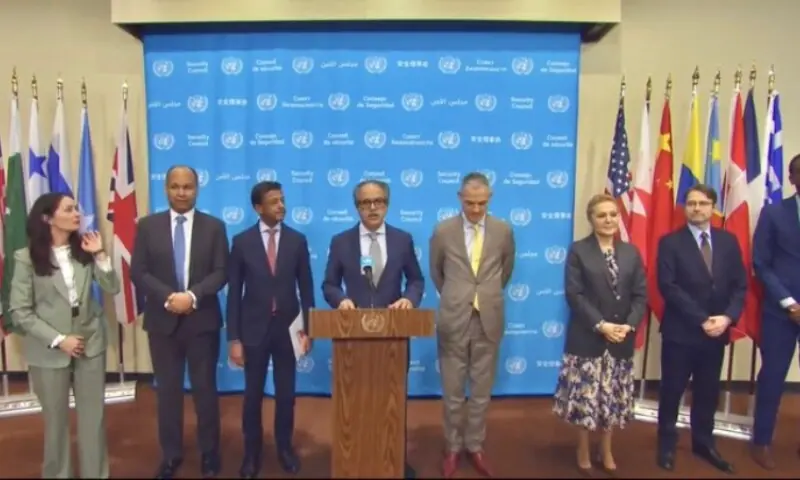
Other regional actors also weighed in, with Qatar saying it supports all diplomatic efforts to end the war with Iran, and Turkiye stressing the need for swift result-oriented negotiations.
Meanwhile, rare criticism of the US-Israeli war came from the German president on Tuesday, who spoke of a “deep rift” with its traditional ally, and called the war on Iran a “breach of international law”.
In a statement, Qatar’s foreign ministry spokesman Majed al-Ansari said the war had stretched Gulf states’ security systems beyond breaking point.
“The Gulf states — which have been working closely and in parallel to ensure their security — are in need of a post-war re-evaluation of what a shared regional security framework truly entails,” he added.
After US President Donald Trump announced there had been communication between Washington and Tehran, al-Ansari said: “We support all diplomatic efforts within this framework, whether through official or unofficial channels and contacts”.
Separately, President Recep Tayyip Erdogan said Turkiye would continue working with all its resources to establish peace.
Ankara, he said, is considering various measures to protect the economy from the US-Israeli war on Iran, which has engulfed the region and sent energy prices soaring.
“War, while being Israel’s war, is being paid for by the entire world,” Erdogan said during an address, calling for the door to dialogue to be opened and stressing the need to pursue result-oriented negotiations swiftly.
Meanwhile, in unusually strong comments, the German head of state said: “The rift is too deep and the trust in American power politics has been lost, not only among our allies but… worldwide”.
Frank-Walter Steinmeier’s words carry weight, although his role is mostly ceremonial.
“Our foreign policy does not become any more convincing simply because we do not call a breach of international law a breach of international law.” He stressed that the US-Israel war on Iran was, “in my view, in breach of international law”.
“There is little doubt that, in any case, the justification of an imminent attack on the US does not hold water,” he added.