
Then vs. Now: How the PS3 Launch Changed Gaming Forever 19 Years Ago
Intelligence report synthesized for precision. Verified source updates below.
Detailed Report
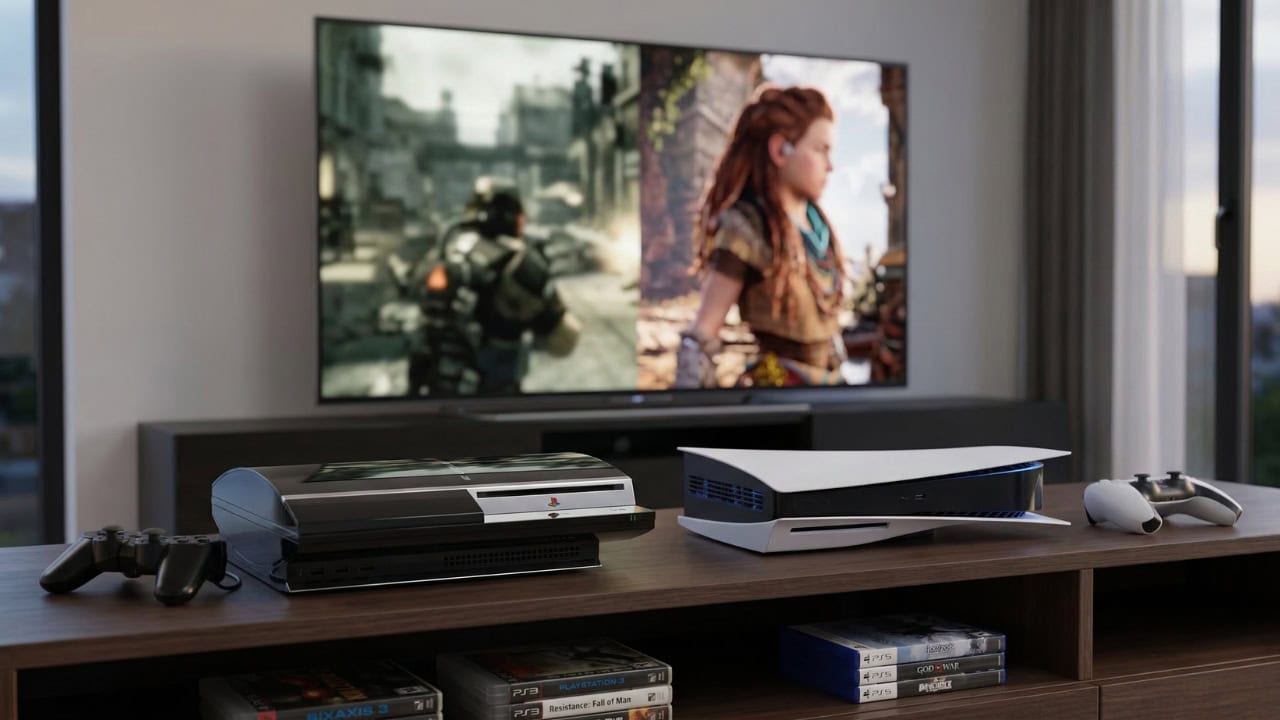
Today is the 23rd of March, 2026, and exactly 19 years ago on this day in 2007, Sony launched the PlayStation 3 (PS3) in Africa, Australia & New Zealand, Europe, and the Middle East. The launch was highly anticipated but immediately controversial. The new system arrived with significant hardware compromises. Specifically, it did not include the physical Emotion Engine or Graphics Synthesizer chips, which made it far less backward-compatible with previous PlayStation titles. Furthermore, the console launched at a staggering premium price of €599 in Europe and £425 in the U.K.
The early days of the PS3 were rough. However, this turbulent launch fundamentally changed the gaming world. The struggles Sony faced forced the company to adapt, innovate, and rebuild. Consequently, the lessons learned from the PS3 set the base for further development. Those hard-learned lessons directly shaped the massive success of the PlayStation 4 and the current PlayStation 5. Let us look back at how the PS3 altered history and compare the technology then versus now.
Sony removed the physical PlayStation 2 chips to cut exorbitant manufacturing costs. Instead of using native hardware, the company relied on software emulation to play older games. Gamers were incredibly frustrated initially. However, this software-driven strategy successfully predicted the future of the industry.
Maintaining old hardware chips inside new consoles is simply too expensive and unsustainable for long-term production. Today, the PS5 uses advanced software layers to play PS4 titles natively. Moreover, modern developers now rely entirely on native recompilation and emulation layers to preserve classic PS3 games on modern hardware. The painful hardware excision of 2007 established the standard for modern backward compatibility.
The brain of the PS3 was the legendary Cell Broadband Engine. Sony, Toshiba, and IBM spent an estimated $400 million developing this highly unique chip. It featured a main Power Processing Element operating alongside specialized Synergistic Processing Elements (SPEs). The processor delivered an impressive 230 GFLOPS of raw computing power.
Unfortunately, it was a nightmare to program. Developers struggled immensely to manage its complex memory system. Third-party games often ran poorly on the PS3 compared to rival consoles.
Because of this intense friction, system architect Mark Cerny completely revolutionized Sony’s hardware philosophy. He introduced the “Time to Triangle” concept. This metric tracks exactly how long developers need to familiarize themselves with new hardware. On the PS3, it took studios an agonizing six to twelve months to get up to speed. Sony fixed this massive flaw on the PS4, reducing the time to just one or two months. Now, with the highly accessible PC-like architecture of the PS5, developers need less than a single month.
When we compare the internal hardware of 2007 to 2026, the technological evolution is mind-blowing.
Memory Evolution: The PS3 divided its memory into two tiny, separated pools. It featured 256MB of system RAM and 256MB of video RAM. This hard split caused constant data bottlenecks. Fast forward to today. The PS5 boasts an enormous 16GB of unified GDDR6 memory. This unified approach allows incredibly fast data sharing between the CPU and GPU. Furthermore, upgraded systems like the PS5 Pro are pushing memory bandwidth to a blistering 576 GB/s.
Storage Revolution: The PS3 used a slow, mechanical 5400 RPM hard drive. It transferred data at a sluggish rate of roughly 50 to 100 MB/s. This slow speed forced game designers to hide loading screens using long corridors and painfully slow elevator rides. Alternatively, the PS5 uses a custom NVMe SSD. It hits raw throughput speeds exceeding 5.5 GB/s. This massive upgrade entirely eliminates loading screens. Consequently, it grants level designers the absolute freedom to build open worlds with instant fast travel.
Sony took a massive financial risk by putting a Blu-ray drive into every PS3. The drive was incredibly expensive to manufacture. It caused Sony to lose billions of dollars during the console’s early years.
However, the aggressive gamble worked perfectly. The PS3 rapidly injected Blu-ray players into millions of living rooms. This massive user base quickly destroyed the rival HD DVD format. Additionally, the high-capacity 50GB optical discs allowed massive cinematic games to exist without requiring multiple discs in a single box. While physical media is naturally declining in 2026, the PS5 still proudly supports Ultra HD Blu-ray playback.
Because third-party studios struggled with the Cell processor, Sony had to rely heavily on its first-party teams. Studios like Naughty Dog and Guerrilla Games stepped up to the plate. Sony’s specialized ICE Team helped these developers unlock the Cell’s true potential.
These developers created incredibly advanced proprietary game engines. In doing so, they pioneered the blockbuster, narrative-driven formula. Games like Uncharted and Killzone 2 proved that the console could deliver groundbreaking, movie-like experiences. This absolute focus on premium single-player storytelling remains the core identity of PlayStation Studios today.
The PS3 launch also kick-started Sony’s digital ambitions. The console introduced the universally beloved XrossMediaBar (XMB) interface. It effectively transformed the gaming console into a true multimedia hub. Concurrently, Sony launched the PlayStation Network (PSN).
The network definitely faced severe growing pains. Most notably, a catastrophic external hack shut down the PSN globally for 24 days in 2011. Yet, Sony learned from the disaster. The company heavily fortified the network’s security and expanded its PlayStation Plus service. Today, the PSN generates massive revenue. It currently supports well over 123 million active users across consoles and PC platforms.
The PS3 also hosted wildly ambitious social experiments. In 2008, Sony launched PlayStation Home. It was a massive 3D virtual world where players decorated apartments, socialized, and played mini-games. Sony eventually closed it in 2015. However, it effectively prototyped the modern metaverse. Fans are still actively restoring its server functionality today.
Finally, the PS3 contributed massively to real-world science. Through the Folding@home project, over 15 million users donated their console’s computing power to Stanford University. The unique Cell processor simulated complex protein dynamics. This research directly aided the fight against diseases, cementing a legacy that extends far beyond entertainment.
The PS3 launch 19 years ago was far from perfect. It was defined by immense corporate arrogance and overly complex silicon. However, those early mistakes served as a highly necessary crucible. Sony learned crucial lessons about developer accessibility, hardware manufacturing costs, and network security. Ultimately, the intense struggles of March 2007 paved the clear, successful path that the PlayStation brand confidently walks today.
Tech HistoryHow Intel’s Pentium Processor Changed Personal Computing ForeverBy Waleeja Khan|8 hours ago|4 min readMarch 22, 1993, marked a defining moment in personal computing. Intel officially launched the Pentium processor, a revolutionary chip that redefined PC performance, efficiency, and.
Tech HistoryThe Tweet That Changed Everything: How One Ordinary Message Gave Birth to Modern InternetBy Abdul Wasay|5 days ago|5 min readOn March 21, 2006, at 12:50 PM Pacific Standard Time, a 29-year-old software engineer named Jack Dorsey typed seven words into a bare-bones web interface.
Tech HistoryThen & Now: From the First AC Power System to Modern Electricity in 2026By Zohaib Shah|3 days ago|4 min readOn March 20, 1886, history quietly lit up Main Street in Great Barrington, Massachusetts. For the first time, an alternating current (AC) power system supplied.