The Scandal That Broke Facebook: Cambridge Analytica & the Dark Truth About Big Tech
Intelligence report synthesized for precision. Verified source updates below.
Detailed Report
On March 21, 2018, Mark Zuckerberg sat down in front of a camera and delivered one of the most carefully worded apologies in corporate history.
“I’m sorry,” he said. “This was a major breach of trust.”
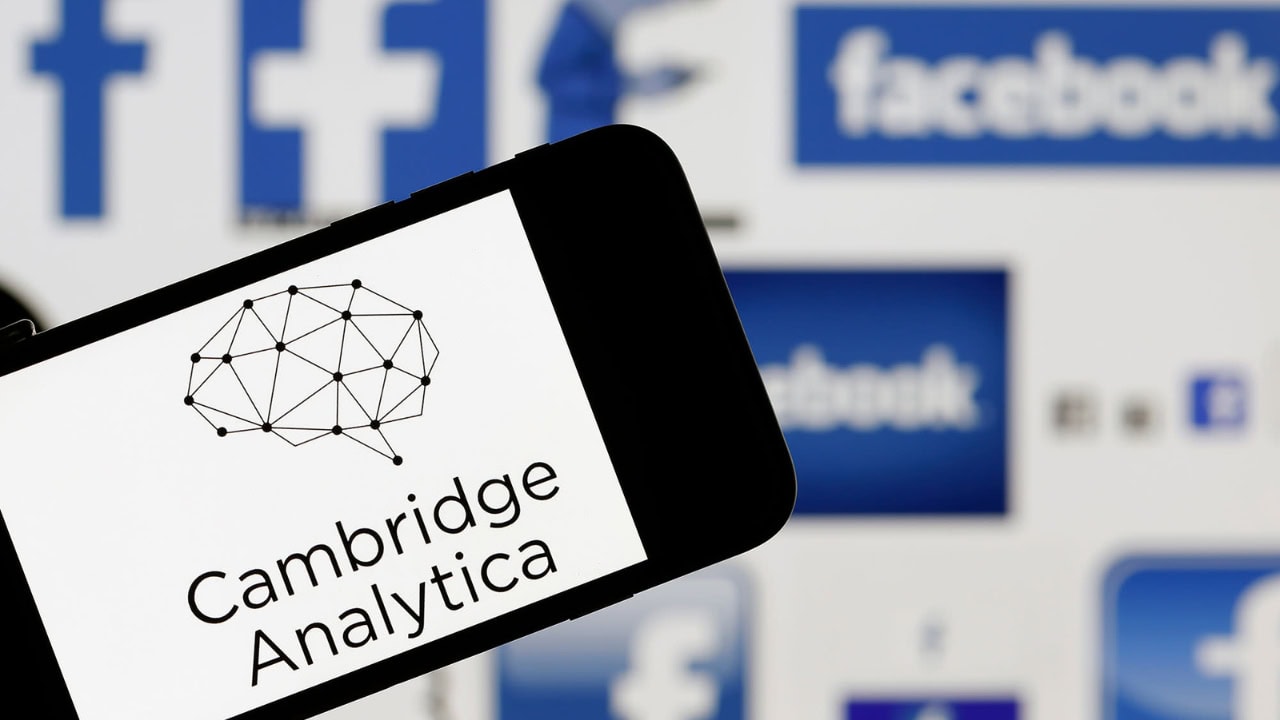
Cambridge Analytica then matched these psychological profiles against US voter records to identify which individuals might be susceptible to specific kinds of political messaging. The firm’s work was funded by Republican megadonor Robert Mercer and co-founded by Steve Bannon, who would later become Donald Trump’s chief strategist. The company’s services were used by Ted Cruz’s presidential campaign before being deployed on the Trump campaign.
The story might never have surfaced without Christopher Wylie, a British-Canadian data scientist who had served as Cambridge Analytica’s Director of Research from 2013 to 2014. Wylie was just 24 when he helped design the data harvesting operation, but he grew increasingly alarmed by how the tools he built were being weaponized.
Wylie later described what he had created in stark terms, calling it Steve Bannon’s “psychological warfare tool.” In testimony before both the US Congress and the UK Parliament, he explained that the techniques Cambridge Analytica used to identify and target psychologically vulnerable voters were originally developed for military-grade information operations, the kind of counter-extremism strategies used against ISIS recruitment, but repurposed for domestic elections. Instead of discouraging radicalisation, the tools were used to encourage it, targeting people prone to conspiratorial thinking and paranoid ideation and feeding them content designed to exploit those tendencies.
Guardian journalist Carole Cadwalladr had tracked Wylie down via LinkedIn in early 2017 and spent a year persuading him to go public. When the story was ready, Cadwalladr brought in Channel 4 News and The New York Times due to legal threats from Cambridge Analytica against The Guardian and The Observer. The articles were published simultaneously on March 17, 2018.
Just days before the story broke, Channel 4 News aired undercover footage of Cambridge Analytica CEO Alexander Nix and other senior executives boasting about using sex workers, bribes, and disinformation to help political candidates win elections around the world. The footage was devastating. Nix was suspended immediately.
For Cambridge Analytica itself, the consequences were terminal. The firm filed for Chapter 7 bankruptcy in May 2018. CEO Alexander Nix was banned from the industry. The FTC sued the company and settled separately with both Nix and Kogan, requiring them to destroy all personal data collected through the app and restricting their future business dealings. The scandal also destroyed the reputation of SCL Group, Cambridge Analytica’s British parent company, a military contractor that specialized in information operations for clients including the UK Ministry of Defense and the US Department of Defense.
The Regulatory Earthquake The scandal forced a reckoning that reshaped the entire technology industry’s regulatory landscape. The European Union accelerated work on the General Data Protection Regulation, which took effect in May 2018 and became the global gold standard for privacy law. The GDPR gave European citizens the right to access, correct, and delete their personal data, and imposed fines of up to 4% of annual global revenue for violations. In the United States, the scandal fueled the creation of the California Consumer Privacy Act, signed into law in June 2018, and energised broader calls for federal privacy legislation and antitrust action against Big Tech. The EU later passed the Digital Services Act and Digital Markets Act, both of which drew directly on the lessons of the Cambridge Analytica era.
But the deepest impact was cultural. March 2018 marked the moment the public finally understood that “free” social media was never truly free. Users were the product. Their likes, shares, comments, location data, and even the time they spent hovering over a post were being harvested, profiled, and sold. The illusion that social media was just a fun way to stay in touch with friends shattered.
Researchers studying user reactions found that most people did not delete their accounts despite the scandal. Instead, the response was more subtle: widespread confusion about privacy settings, reluctance to engage with “endless” data breach notifications, and a general sense of resignation. Online privacy felt confusing and overwhelming, and many users lacked the knowledge to fully understand the risks, particularly those involving their social networks.
The Cambridge Analytica case became the template for future scandals involving TikTok’s data practices, Google’s ad targeting, and the training of AI systems on user data without meaningful consent. It also accelerated the rise of privacy-first alternatives like Signal, Mastodon, and Bluesky.
Perhaps most importantly, it changed how lawmakers treat technology companies. Governments worldwide began approaching tech platforms not as innocent conduits for communication but as powerful institutions that require oversight comparable to public utilities or financial institutions.
The scandal also exposed the uncomfortable truth that many of us still live with: our digital lives are far more transparent and manipulable than we realised. The tools that connect us can also divide us, radicalise us, and profit from our vulnerabilities. The psychological profiling capabilities that Cambridge Analytica pioneered have not disappeared. They have been absorbed into the advertising infrastructure of the platforms themselves, operating at vastly greater scale with the help of artificial intelligence.
Tech HistoryThe Tweet That Changed Everything: How One Ordinary Message Gave Birth to Modern InternetBy Abdul Wasay|3 days ago|5 min readOn March 21, 2006, at 12:50 PM Pacific Standard Time, a 29-year-old software engineer named Jack Dorsey typed seven words into a bare-bones web interface.
Tech HistoryThen & Now: From the First AC Power System to Modern Electricity in 2026By Zohaib Shah|1 day ago|4 min readOn March 20, 1886, history quietly lit up Main Street in Great Barrington, Massachusetts. For the first time, an alternating current (AC) power system supplied.
Tech HistoryThen & Now: How Batteries Went From Lab Curiosity to Global NecessityBy Zohaib Shah|1 day ago|4 min readOn March 20, 1800, Italian scientist Alessandro Volta introduced the world to a groundbreaking invention: the voltaic pile. In a letter to the Royal Society.
Tech HistoryMarch 6: From Android Market to Google Play- The Evolution of the World’s Largest App StoreBy Waleeja Khan|2 weeks ago|4 min readIt is difficult to imagine today’s digital world without the convenience of a single platform where millions of applications, games, books, films, and music are.