
Hungary's Orbán accused of disloyalty and blackmail over Ukraine loan veto
Intelligence report synthesized for precision. Verified source updates below.
Detailed Report
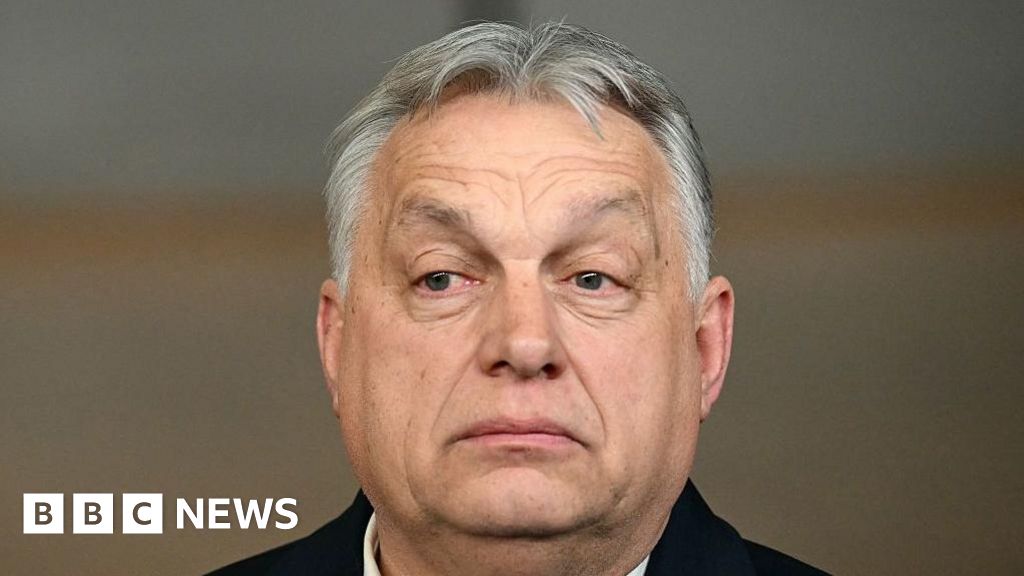
"No oil = no money," Orbán said in a post on X after Thursday's summit in Brussels during which he refused to lift his veto, citing a feud over a damaged pipeline that transports Russian oil to Hungary.
German Chancellor Friedrich Merz said Orbán's actions amounted to "a gross act of disloyalty", while European Council head António Costa described them as tantamount to "blackmail".
Orbán - who has maintained close ties with Russia since it launched its full-scale invasion in Ukraine in 2022 - has made hostility towards Ukraine a key issue ahead of elections on 12 April.
Hungary depends on Russian energy and Orbán has accused Ukraine of disrupting these energy supplies by failing to repair a Soviet-era pipeline, called Druzhba, which carries Russian oil to Hungary and Slovakia through Ukraine.
Kyiv says the pipeline was damaged in January by Russian air strikes, that its repair will last for weeks - but also that restoring the flow of oil would be equivalent to lifting sanctions on Moscow.
While the pipeline remains out of use, Orbán has blocked the release of EU funds to Ukraine - despite approving the decision at an earlier meeting.
The gathering of EU leaders on Thursday, which went late into the night, ended with many expressing statements of thinly-veiled fury at Orbán's actions.
"Colleagues who have been members of the European Council far longer than I have were deeply angered by what happened today," Germany's Merz told reporters during a news conference in the early hours of Friday.
"It is a gross act of disloyalty within the European Union," he said. "I am firmly convinced that it will leave deep marks."
France's President Emmanuel Macron called the meeting's outcome "unprecedented", adding that the loan's release must be "implemented without delay".
Council President and chairman of the talks Costa added to the chorus of discontent, describing Hungary's actions as "completely unacceptable".
"Nobody can blackmail the European institutions," he said.
Orbán, however, remained resolute in his stance following the meeting.
"It was a tough debate, but we stood our ground," he wrote on X. "We have the right to say 'no' to the Ukrainian war loan. As long as @ZelenskyyUa does not lift the oil blockade, they will not receive any money from Brussels."
In addition to Orbán, Slovakia's Prime Minister Robert Fico - another ally of Russian President Vladimir Putin - also refused to endorse the summit's conclusions that reaffirm the intent to release the funds to Ukraine. The release of the funds requires unanimity and the conclusions say it will be discussed at the leaders' next meeting.
European Commission President Ursula Von der Leyen vowed that the loan would be delivered "one way or the other", while Macron said there would be "no plan B" for the funds, because "plan A must be implemented".
Ahead of the meeting, Ukraine's Volodymyr Zelensky had issued a plea for the release of the funds.
"For the third month now, the most important financial security guarantee for Ukraine from Europe is not working - the €90bn support package for this year and the next," he told EU leaders during the summit.
"This is critical for us. It is a resource to protect lives," he said.
Orbán has repeatedly stalled EU aid for Ukraine as well as successive rounds of sanctions on Russia.
He is seeking another term and opinion polls suggest his party is lagging behind their main rivals.
Will the pursuit of a closer relationship with the EU risk courting electoral disaster by alienating Brexit-backing voters?
It is not the first time that there has been deep energy-linked frustration in the heart of Europe.
A Saturday school for Ukrainian children is expanding from Bristol into South Gloucestershire.
Watch: Sean Penn receives 'Oscar' in Ukraine after skipping US ceremonyThe Academy Award winning US actor won his third Oscar on Sunday, but skipped the ceremony to visit Ukraine.


