Pakistan halts Afghanistan operation for Eid, Kabul follows suit
Intelligence report synthesized for precision. Verified source updates below.
Detailed Report
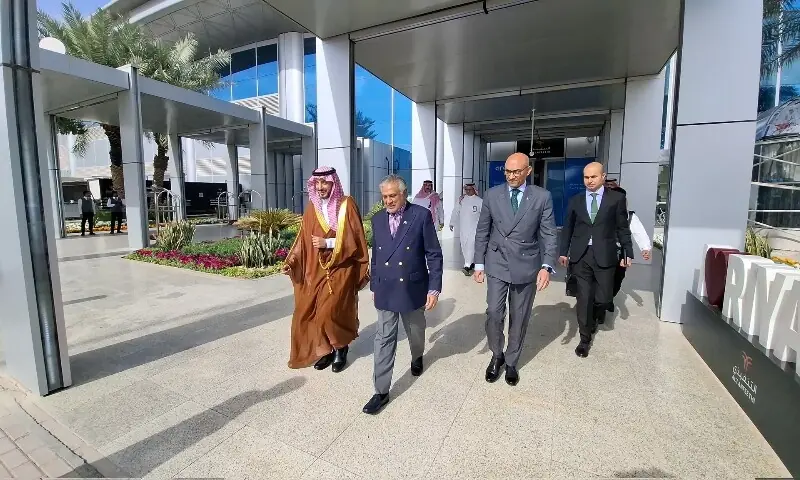
ISLAMABAD: Information Minister Attaullah Tarar on Wednesday announced that Pakistan had decided on a “temporary pause” in the ongoing Operation Ghazab lil-Haq against the Afghan Taliban in view of Eidul Fitr and “at the request of brotherly Islamic countries”.
In his post on X, Mr Tarar said: “In view of the upcoming Islamic festival of Eidul Fitr, upon its own initiative as well as on the request from the brotherly Islamic countries of the Kingdom of Saudi Arabia, the State of Qatar and the Republic of Turkiye, the government of Pakistan has decided to announce a temporary pause amidst ongoing Operation Ghazab lil-Haq against terrorists and their support infrastructure in Afghanistan.”
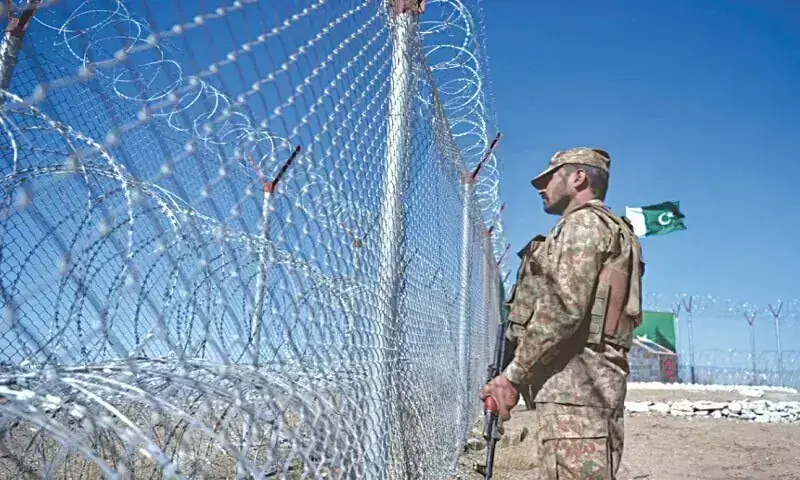
Operation Ghazab lil-Haq was launched on the night of Feb 26 following cross-border firing by the Afghan Taliban.
The minister said the pause would be applicable from midnight March 18-19 to midnight March 23-24.
“Pakistan offers this gesture in good faith and in keeping with Islamic norms,” he said. “However, in case of any cross-border attack, drone strike or terrorist incident inside Pakistan, Operation Ghazab lil-Haq shall immediately resume with renewed intensity.”
Shortly after the announcement, the Afghan Taliban also declared a temporary suspension of their military operations against Pakistan.
Afghan Taliban spokesperson Zabihullah Mujahid also said the decision was taken in response to requests from Saudi Arabia, Turkiye and Qatar.
Meanwhile, in a separate post, Mr Tarar shared details of losses inflicted during the operation on the Afghan Taliban and “Fitna al Khawarij”, a term used by the state for the banned Tehreek-i-Taliban Pakistan (TTP).
According to the minister, 707 militants had been killed and more than 938 injured. He said 255 posts had been destroyed and 44 captured.
He added that 237 tanks, armoured vehicles and artillery guns had been destroyed, while 81 locations across Afghanistan were targeted through air strikes.
He reiterated that on the night of March 16, Pakistan’s armed forces targeted Afghan military installations in Kabul and Nangarhar.
“In these strikes, Pakistan’s forces destroyed drone storage and technical support infrastructure and ammunition storage sites in Kabul and Nangarhar, which were being used by the Afghan Taliban and terrorist elements to carry out attacks against innocent Pakistani civilians,” he said.
“Similarly, Pakistan armed forces effectively targeted and destroyed Afghan Taliban posts in the Bajaur, Kurram, Torkham, Khyber, North and South Waziristan sectors,” he added.
He also shared video footage, saying it showed “precision engagements” against installations, posts and camps supporting terrorism from Afghan soil.
“No civilian population or infrastructure was targeted, contrary to the false claims being propagated by Afghan regime officials and sections of the media,” he said.
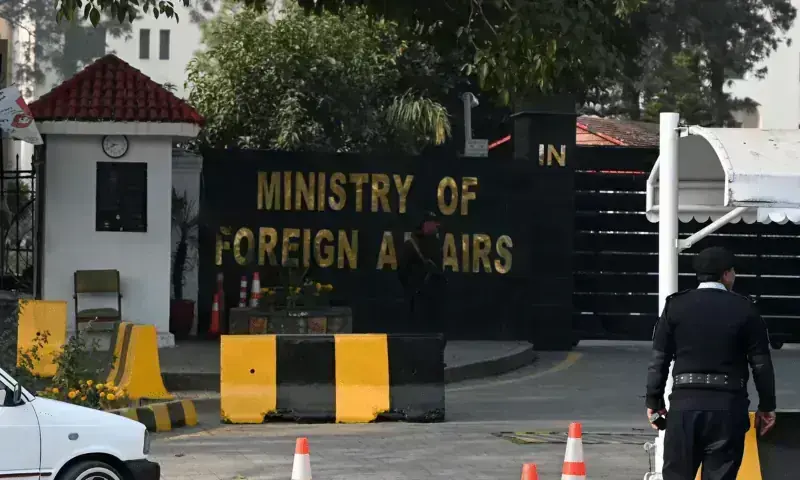
Meanwhile, the Foreign Office on Wednesday rejected a “baseless, misleading and unwarranted” statement issued by India’s Ministry of External Affairs regarding Pakistan’s action against alleged terrorist infrastructure in Afghanistan.
The development follows targeted airstrikes carried out in Kabul and Nangarhar as part of Operation Ghazab lil-Haq. Pakistan has said it targeted “Camp Phoenix”, a former US military base now used by Afghan Taliban forces, while Afghan authorities claimed a drug rehabilitation centre was hit.
India had condemned Pakistan’s action, calling it a “direct threat” to regional peace.
In a statement issued on Wednesday, Foreign Office spokesperson Tahir Andrabi said, “Pakistan rejects the baseless, misleading and unwarranted statement issued by the Indian Ministry of External Affairs on Pakistan’s ongoing action against terrorist infrastructure in Afghanistan.”
“Against the backdrop of India’s active sponsorship of terrorism directed at Pakistan from Afghan soil, as well as its historical role as a spoiler, this statement merely reflects India’s blatant hypocrisy and duplicity,” he said.
Mr Andrabi recalled that the statement emanated “from a country whose leadership remains unaccountable despite instrumentalising Islamophobia for domestic electoral gain and perpetrating pogroms against its Muslim population”.
Inter-Services Public Relations (ISPR) Director General Lt Gen Ahmed Sharif Chaudhry said the Kabul strike targeted an ammunition storage site.
Speaking on Geo News, he said Operation Ghazab lil-Haq was part of Pakistan’s counterterrorism campaign.
“This war has been imposed upon Pakistan by terrorists and their sponsors,” he said, stressing that it was common knowledge that India was behind terrorism in Pakistan and was using Afghanistan as “a base of operations”.
He said that Afghanistan had acted as a base of operations for every act of terrorism in Pakistan, pointing to the suicide bombing in an imambargah in Islamabad’s Tarlai area.
“Innocent children, people and worshippers were killed during Friday prayers. Where did the terrorist come from? Afghanistan,” DG ISPR said.
“In the Wana Cadet College attack, five terrorists were killed, and all of them were Afghans … Our police and people are under attack, and where are these terrorists coming from? They are coming from Afghanistan,” he said.
DG ISPR added that terrorist leaders, such as Noor Wali Mehsud, Bashir Zeb and Gul Bahadur were “being hidden” in Afghan territory.
“We have not imposed any war upon Afghanistan. The war on terror has been imposed on us,” he asserted. “We have no issues with our Afghan brothers and sisters, absolutely not. They are themselves oppressed by the Afghan Taliban regime.”
Outlining the operation’s “immediate context”, the DG ISPR said that last month, multiple terrorist hideouts along the Pak-Afghan border were struck. He added that the banned TTP was struck, not Afghans.
“They [Afghan Taliban] then struck. They hit 53 locations in Pakistan and our posts along the border,” he stated. “Everyone [must know] that they initiated it and we responded, and we are going to take them to task.”
He added that 81 locations in Afghanistan were targeted in airstrikes to eliminate “terrorist support infrastructure”, such as corps and brigade headquarters, ammunition dumps, storage sites and other facilities enabling terrorist attacks on Pakistani soil.
“When these strikes take place, the information ministry immediately provides regular updates and video clips,” he explained. “If you examine the clips, they pinpoint targeting hangars, tunnels and headquarters, which are being provided by the Afghan Taliban regime, which is the master terror proxy.”
Speaking about the strike in Kabul, DG ISPR said that there was an ammunition and drone storage site, which was targeted. He added that there was video footage of the strike, which was publicly available.
“We hit that … if you strike ammunition, there are secondary detonations. Our intelligence was correct; we hit an ammunition storage site, so the ammunition exploded,” he said.
“When it did, people in Kabul saw the explosion and fireballs, which lasted for some time. Old missiles like Russian Scud missiles, ammunition, drones and equipment exploded. That is what we struck.”
He added, “The record is there, the visuals are there, the aftereffects of that strike are there, which all confirm that we struck an ammunition site.”
DG ISPR added that precision-guided munitions (PGMs) were used in strikes, as opposed to cheaper general-purpose bombs, which could cause greater collateral damage.
He rejected Afghan Taliban claims as lacking credibility, questioning how a drug rehabilitation centre could exist alongside an ammunition depot.
Lt Gen Chaudhry described the site as a “military containerised structure”, possibly used for training or sheltering militants. He said the target was not civilian and termed Afghanistan a hub for multiple militant groups, citing UN reports of 22 terrorist organisations operating there.
“We must understand that Afghanistan is not a state per se; this is a territory captured by the Afghan Taliban, which is a terrorist organisation,” he said.